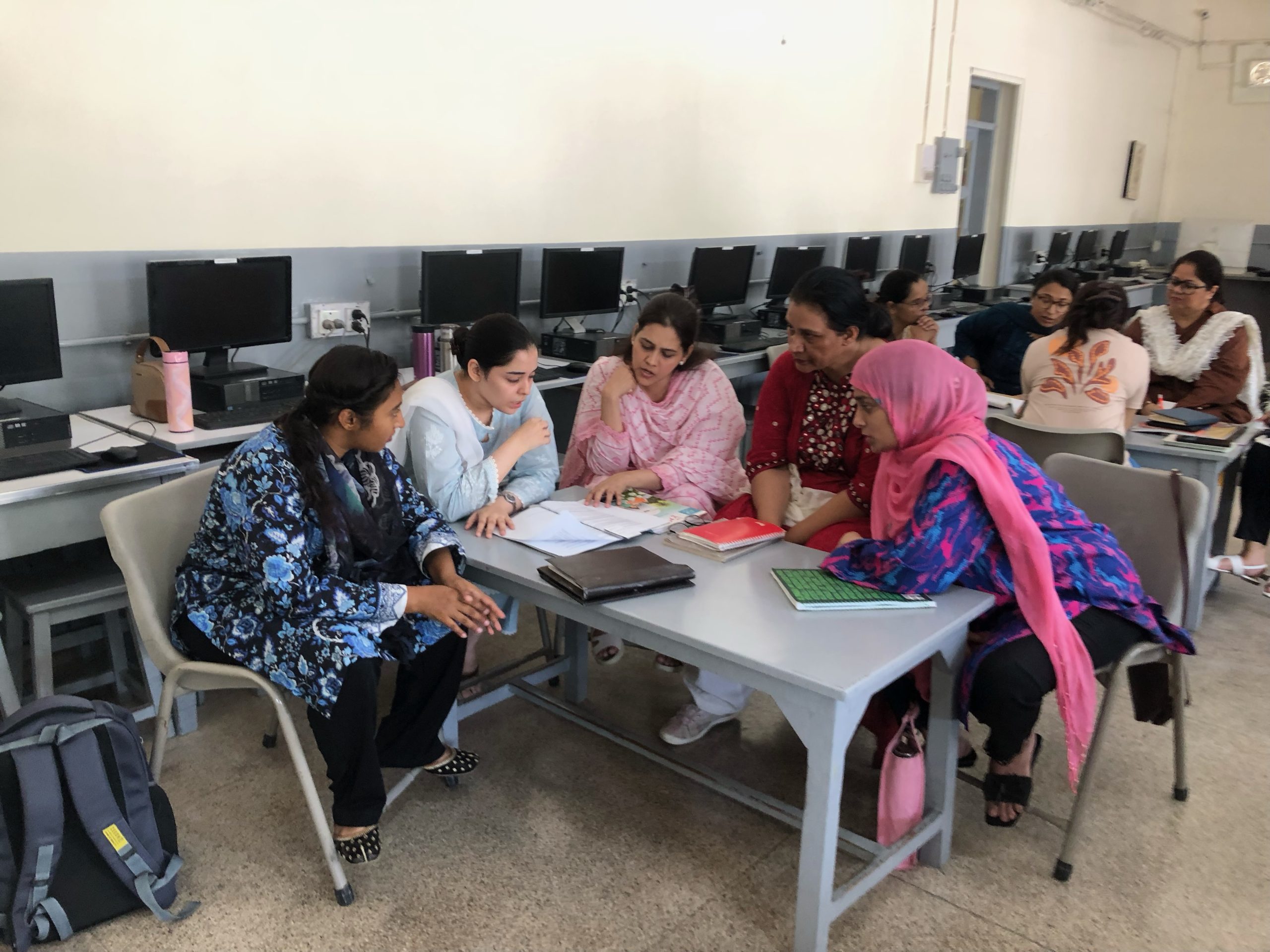
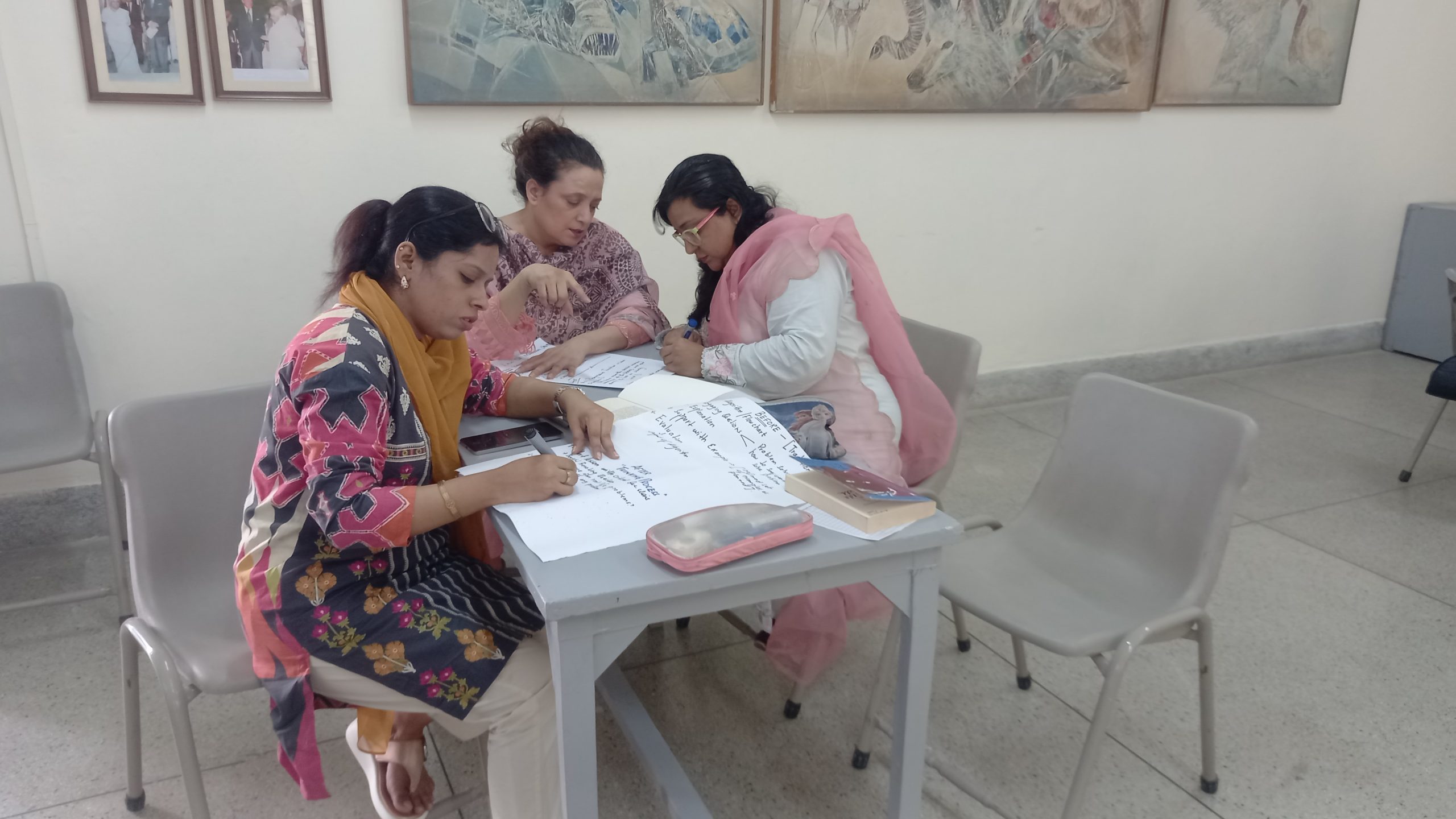
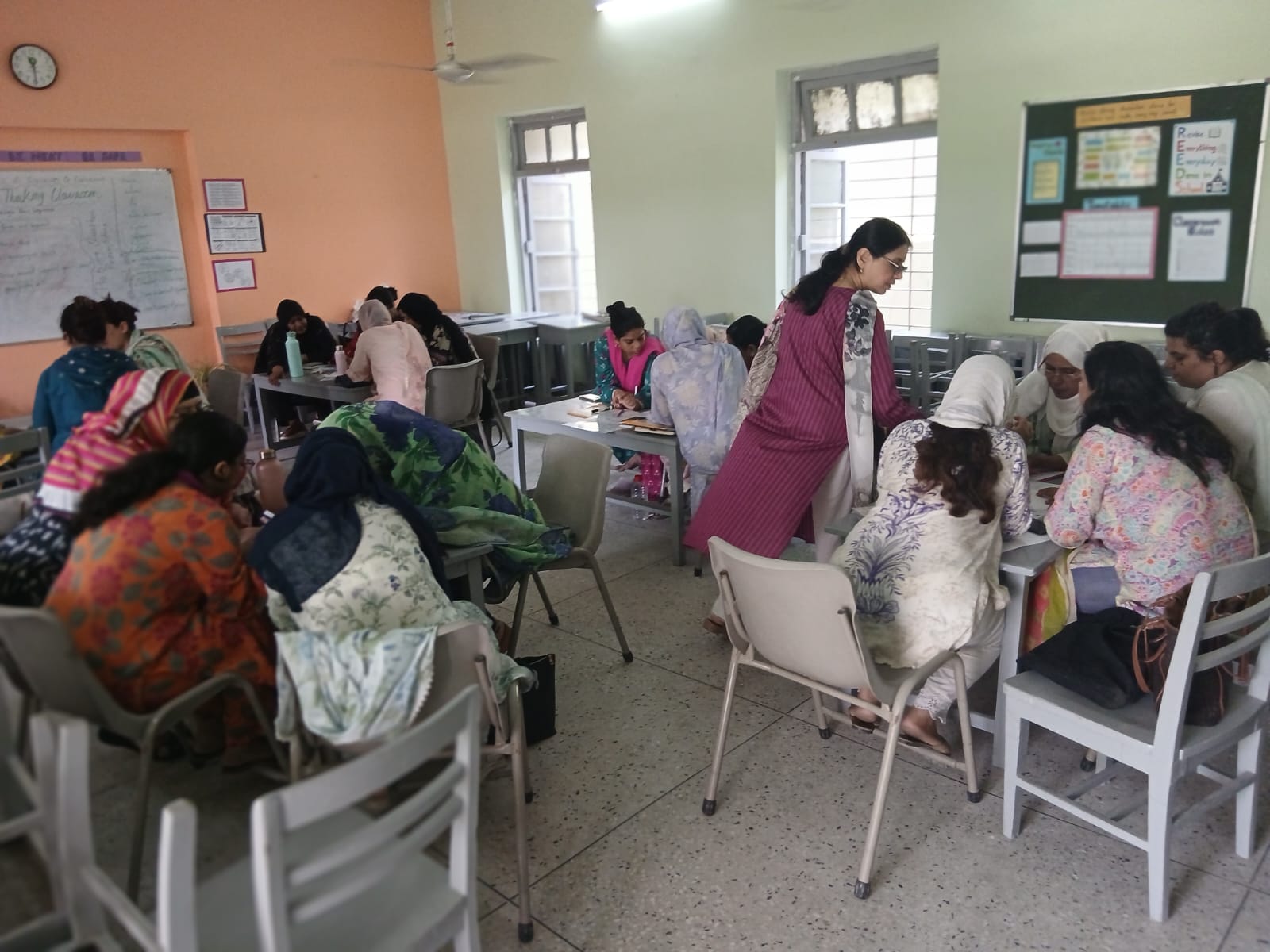
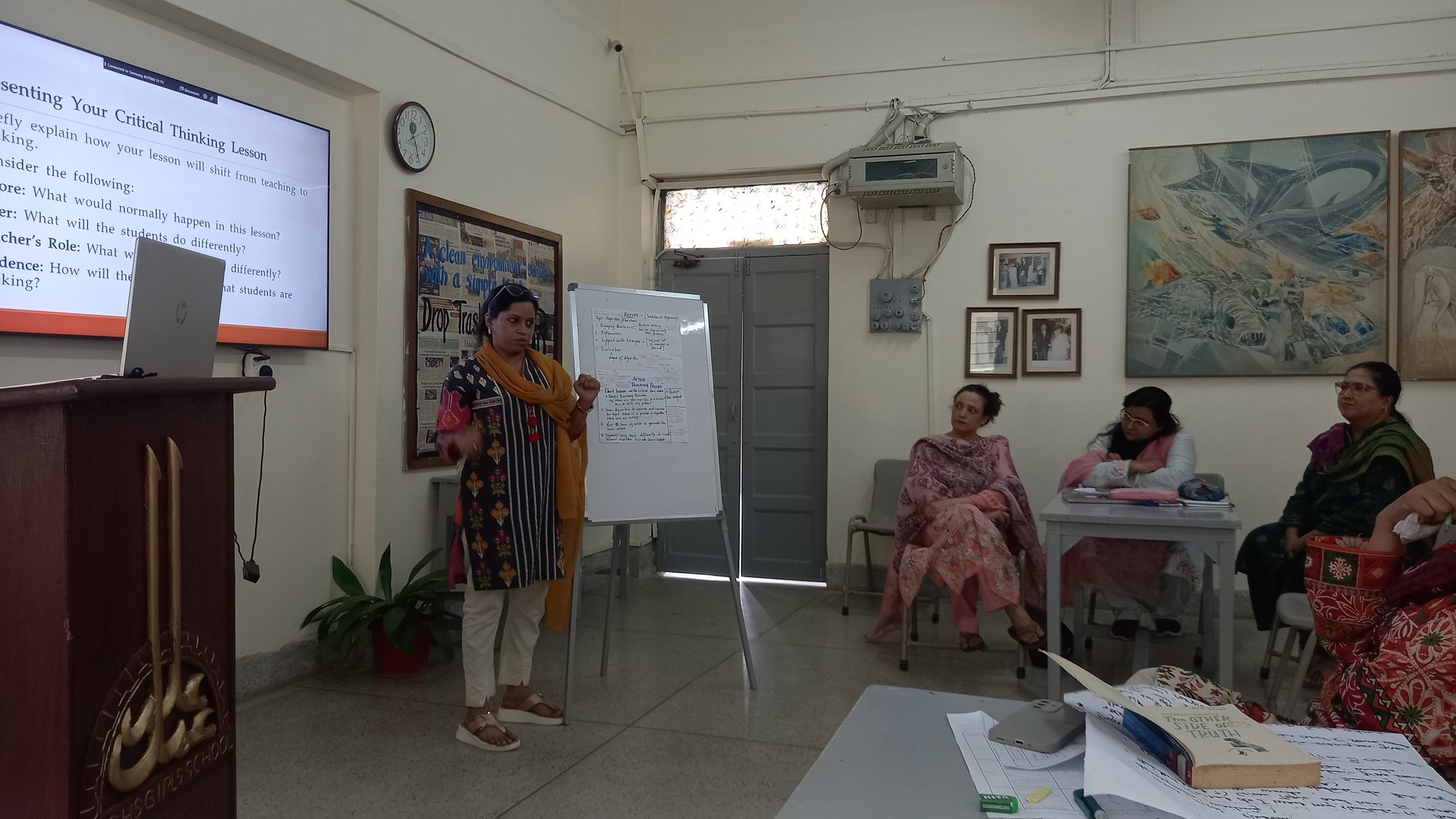
On Saturday, 19 September 2026, Continuing Professional Development sessions on the theme ‘The Thinking Classroom’ were conducted for teachers from Years 1–10 through four separate sessions. The Lower Primary session (Years 1–2) was conducted by Ms. Sarah Ladhani; the Upper Primary session (Years 3–5) by Ms. Saima Shiraz; the Years 6–7 session by Ms. Mona Zahid and Ms. Semeen Fatima; and the Years 9–10 session by Ms. Bushra Nasir and Ms. Qurat-ul-Ain Syed.
Years 1–2: The CPD, titled “The Thinking Classroom: From Experiencing to Designing for Thinking,” invited teachers to experience learning from a pupil’s perspective and explore what makes a task promote deeper thinking. Through creative-thinking activities, Maths riddles and puzzles, teachers experienced how a problem can lead learners towards conceptual understanding.
Teachers examined critical-thinking lesson plans from different subject areas and identified ways to encourage children to question, explain, connect and reconsider. They then designed their own thinking-focused lessons using a planning web that considered the task, instructions, questioning, feedback, extension and reflection.
The session concluded with reflection on what teachers needed to stop, start and provide more opportunities for. It reinforced that creating a Thinking Classroom does not necessarily require changing what is taught, but reconsidering how learning is designed and who is doing the thinking.
Years 3–5: The session began with the challenge, “How many different rectangles can you make with an area of 24 square units?” Working in groups, teachers experienced the learning process as pupils would, discussing, questioning, exploring possibilities and building on one another’s ideas. The activity highlighted the importance of the thinking process rather than focusing only on the final answer.
A key focus was quality questioning. Teachers explored how open-ended questions can extend thinking and practised transforming routine questions into questions that encourage pupils to explain, reason, justify and develop their own ideas. Through classroom videos, they observed how teacher facilitation, pupil interaction, questioning and the learning environment can make thinking visible.
Teachers then analysed sample lesson plans and designed their own Thinking Classroom lessons, incorporating opportunities for pupils to think, question, explain, justify, connect ideas and construct understanding independently.
The session centred on the question, “Who is doing the thinking in the classroom?”, encouraging teachers to reflect on their role as facilitators who create the conditions for pupils to do the intellectual work of learning.
Years 6–7: This session modelled the Building Thinking Classrooms (BTC) approach, based on the school’s ideology of creating classrooms that provoke critical thinking, encourage students to make sense of problems and promote student-centred learning.
The session began with “The Growing Cross”, a Maths task followed by a Gallery Walk. Teachers worked in groups of three, standing and solving the problem on a non-permanent surface. This modelled key BTC practices, including participation, visible thinking, collaboration and taking risks without fear of mistakes.
Through the activity and debrief, teachers explored important principles such as knowledge mobility, where viewing and discussing different solutions promotes learning; valuing the process of thinking rather than performance; using proximity and purposeful questions instead of immediately providing answers; and distinguishing between questions that stop thinking and those that keep students thinking.
The concept of Building Thinking Classrooms, developed by Peter Liljedahl, was introduced interactively. The principles were further explored through Science and Geography activities, demonstrating scientific inquiry, purposeful questioning, activation of prior knowledge and the construction of new understanding.
Teachers selected existing lesson plans and transformed them using Thinking Classroom principles. They considered how to increase independent thinking, make tasks more open-ended, deepen questioning, encourage collaboration and communication, and shift the teacher’s role from the primary source of information to that of a facilitator.
Years 9–10: For Secondary Section teachers, the CPD titled “Who Is Doing the Thinking? Shifting the Cognitive Responsibility in the Classroom” focused on developing critical thinking through purposeful questioning and classroom experiences.
Teachers engaged in thought-provoking activities, including exploring why the elliptical shape of a water tanker supports its design and examining perspectives through The Other Side of the Truth. These activities encouraged teachers to question assumptions, consider multiple perspectives and support ideas with evidence.
The session was guided by three key questions:
- What do I want my pupils to think about?
- What will they do that makes them think?
- What will I do to move their thinking forward?
Teachers subsequently worked in subject-wise groups to redesign lesson plans incorporating critical-thinking strategies and effective questioning techniques. The session emphasised the teacher’s role as a facilitator who deliberately creates opportunities for students to think independently, reason, question and actively construct understanding.
Across all four sessions, the central message remained consistent: a Thinking Classroom is one in which learners are not merely receiving knowledge, but actively thinking, questioning, reasoning, making connections and constructing understanding. The sessions reinforced that Thinking Classrooms are not dependent on using different activities; rather, they are about creating classroom conditions in which pupils are expected, encouraged and supported to think.